2026-10-04 · BillCrop Team · 4 min read
VAT on invoices in Nigeria: what you must know
VAT in Nigeria is 7.5%. See who must charge it in 2026, how to show VAT on an invoice with a worked example, and when to file. Plain words, sources linked.

VAT confuses a lot of small business owners. Do I charge it? How do I show it on an invoice? When do I pay it?
This guide gives you the plain answers on VAT on invoices in Nigeria. We checked each number against the sources linked below. Where the sources disagree, we say so.
What is VAT?
VAT is Value Added Tax, a tax on what customers buy. You add it to your price, collect it, and pass it to the government. It is not your money.
What is the VAT rate in Nigeria?
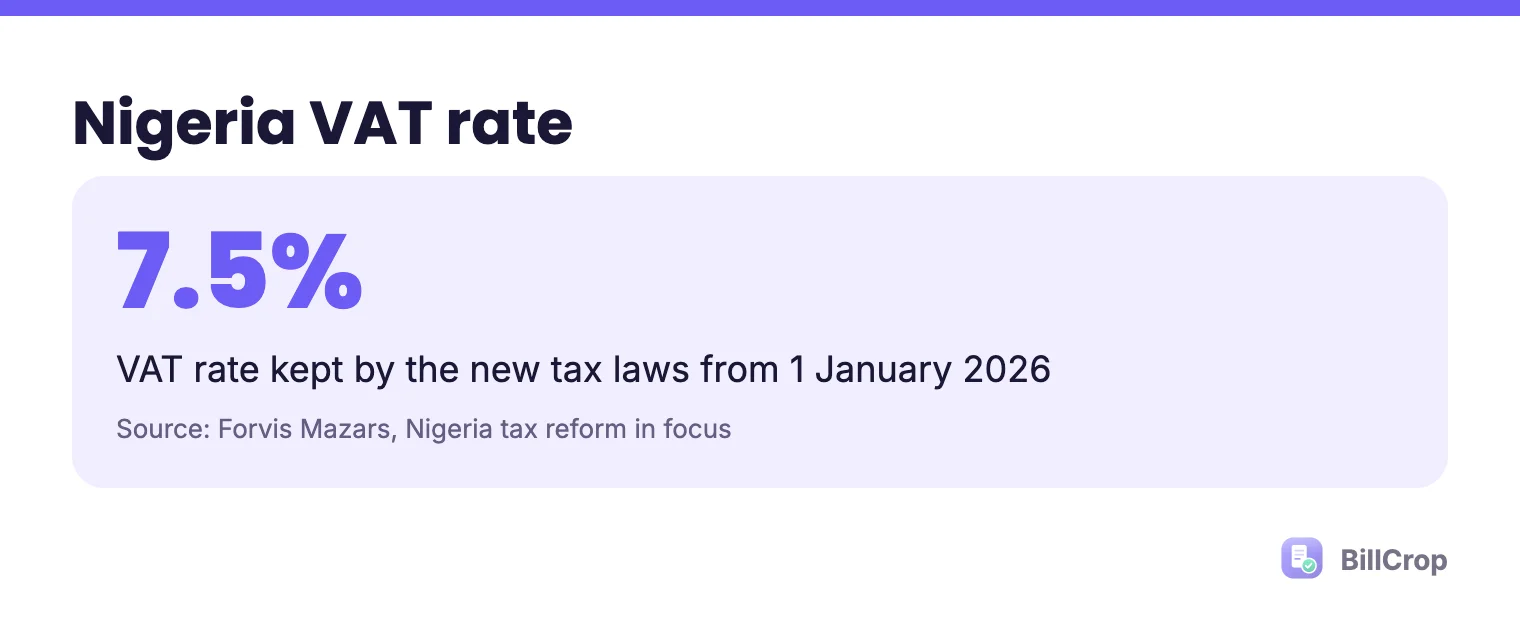
The VAT rate in Nigeria is 7.5%. The new tax laws took effect on 1 January 2026. Forvis Mazars reports that the government kept the 7.5% rate and did not raise it.
The tax office is now called the Nigeria Revenue Service (NRS). It used to be the FIRS.
Do I have to charge VAT?
Maybe not. Small businesses are relieved, but the sources do not agree on the limit. A small business does not have to register for VAT, charge it, file returns or pay it.
Here is where it gets tricky. Forvis Mazars says a small business has ₦100 million or less in turnover and fixed assets of ₦250 million or less. It also says professional service providers do not count as small businesses. But other summaries, such as EY’s note on the signed Act, give a ₦50 million turnover limit for the “small company” definition.
We cannot settle that for you. Ask the NRS or a tax adviser which limit applies to your business. If you are close to the line, ask now, not later.
How do I show VAT on an invoice?
Show it as its own line: subtotal, then VAT at 7.5%, then the total. Never bury it in the price.
Subtotal:        ₦200,000
VAT (7.5%):      ₦15,000
TOTAL DUE:       ₦215,000
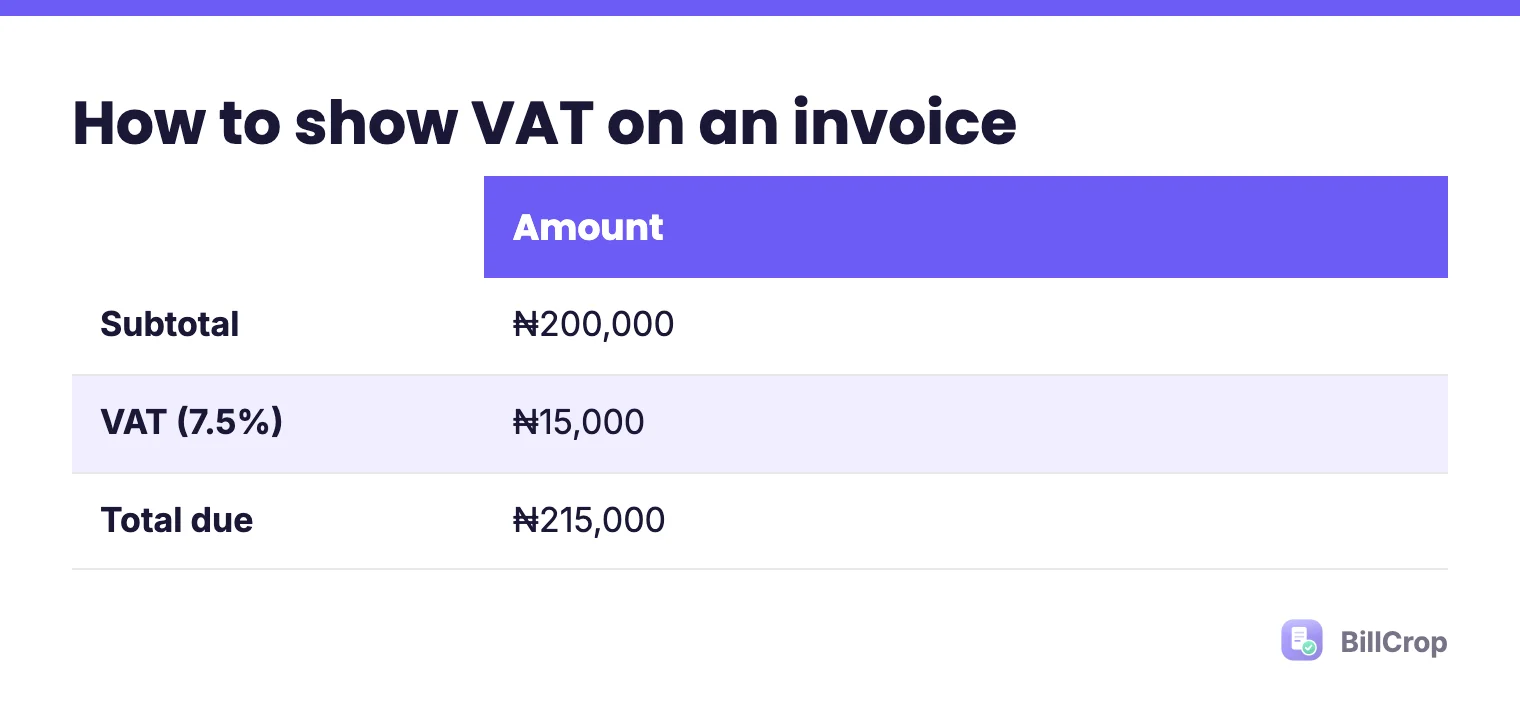
The math: ₦200,000 x 0.075 = ₦15,000. Add it to the subtotal.
If you are not charging VAT, do not add a VAT line. You can write a short note such as “VAT not charged” if you like.
When do I file and pay VAT?
If you are registered, you file every month. A BusinessDay explainer says VAT is due on or before the 21st day of the month after the sale. For example, October sales are due by 21 November. You file even in a month with no sales.
That article still names the old FIRS system, so confirm the current steps with the NRS.
What else changed for invoices?
Two things to know:
- TIN. Every taxpayer needs a Tax Identification Number. Keep yours handy and put it on your invoices if you have one.
- E-invoicing. The NRS is moving businesses onto an electronic invoicing system, in phases. Large businesses went first. Small businesses come later. See our page on NRS e-invoicing for small businesses for the dates.
Do VAT invoices need to be numbered in order?
Yes, EY’s summary says VAT invoices must carry sequential numbers. Even if you do not charge VAT, counting in order is a good habit. See invoice numbering.
What is the difference between a VAT invoice and a receipt?
A VAT invoice asks for payment and shows the VAT. A receipt proves you were paid. Keep both. See receipt vs invoice.
What mistakes should I avoid with VAT?
- Hiding VAT inside the price, so the customer cannot see it.
- Charging VAT when you are not meant to, or the other way round.
- Skipping a monthly return in a month with no sales, if you are registered.
- Not saving a copy of every invoice you send.
A simple VAT habit
- Keep a separate line for VAT on every invoice.
- Keep every invoice number in order.
- Save a copy of every invoice you send.
If you want a clean invoice to start with, use our free invoice generator. It has a tax line you can fill in or leave out. If you are making your first invoice, read how to make an invoice in Nigeria, or copy our free invoice template.
BillCrop supports naira invoices, so you can send them with a pay link and see who has paid. Start your 14-day trial.
This is general information, not tax advice. Rules change. Check with the NRS or a qualified tax adviser before you decide.