2026-10-07 · BillCrop Team · 4 min read
Net 30 payment terms explained (with examples)
What does net 30 mean on an invoice? It means pay in full within 30 days. See examples, 2/10 net 30, how to write terms, and how to pick the right ones.

You will see “Net 30” on many invoices. It sounds fancy. It is not.
Here is what net 30 payment terms mean, how other terms like net 7 and 2/10 net 30 work, and how to pick the right ones for your business.
What does net 30 mean?
Net 30 means the full invoice is due 30 days after the invoice date.
If you send an invoice on 1 October with net 30 terms, the client should pay by 31 October.
“Net” means the full amount, with nothing taken off. The number is how many days the client has. The 30 days are calendar days, so weekends and holidays count unless you say otherwise.
What other payment terms are there?
Other common terms are due on receipt, net 7, net 14, net 60 and net 90. They all work like net 30 with a different number of days.
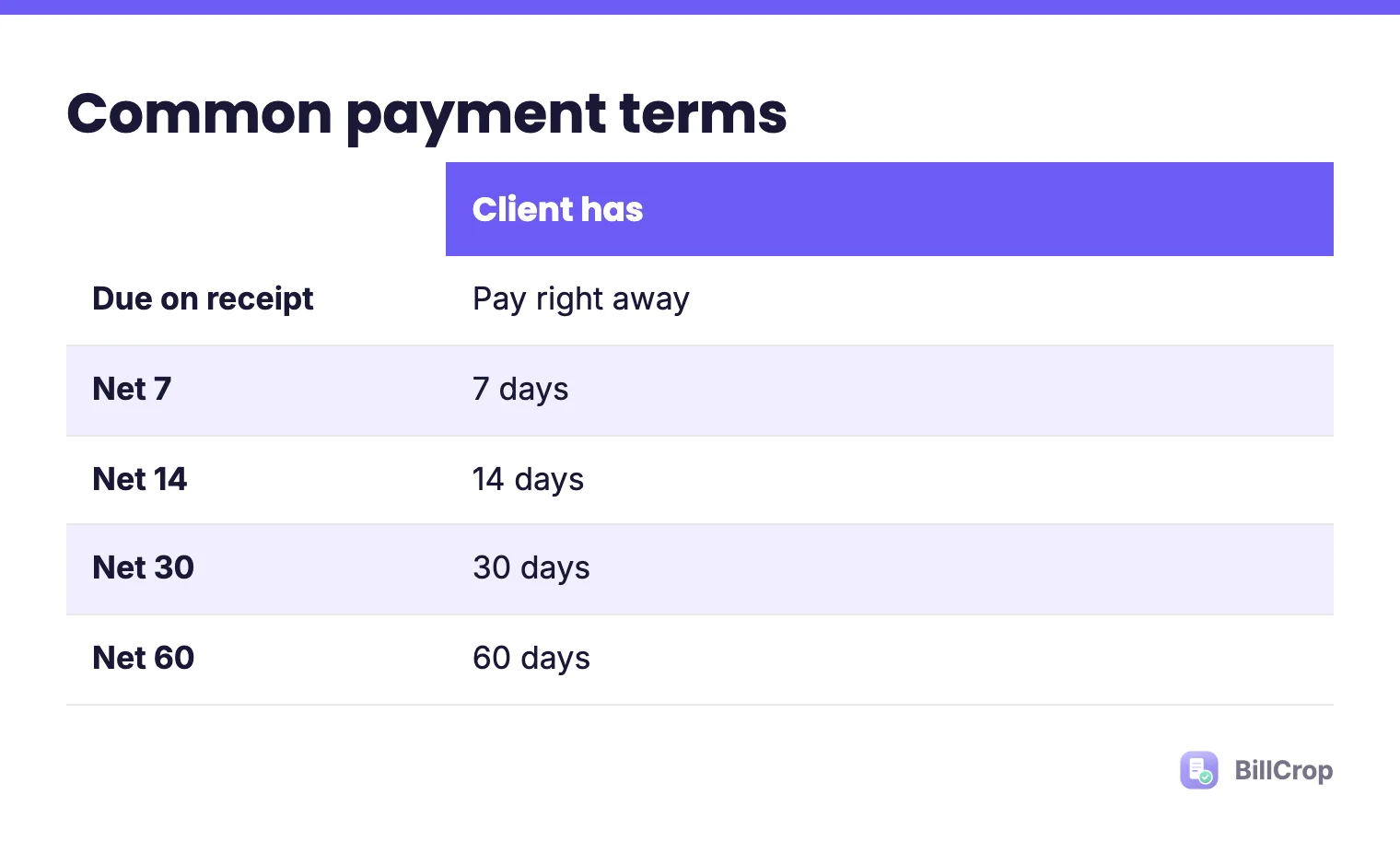
| Term | What it means |
|---|---|
| Due on receipt | Pay as soon as you get the invoice |
| Net 7 | Pay within 7 days |
| Net 14 | Pay within 14 days |
| Net 30 | Pay within 30 days |
| Net 60 | Pay within 60 days |
What does 2/10 net 30 mean?
2/10 net 30 means 2% off if the client pays within 10 days, otherwise the full amount in 30 days. This one adds a reward for paying early. Tipalti explains it like this:
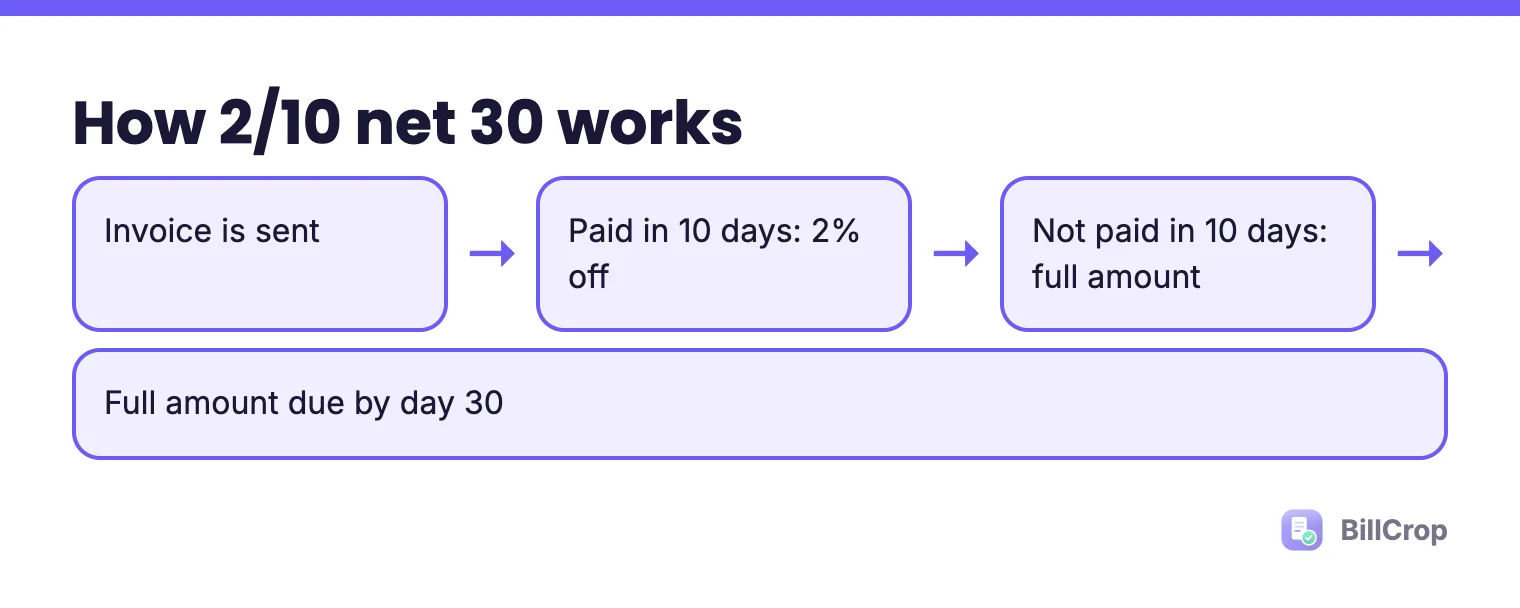
- 2 is the discount in percent.
- 10 is how many days the client has to get the discount.
- 30 is when the full amount is due if they skip the discount.
Example: a ₦100,000 invoice. If the client pays in 10 days, they pay ₦98,000. After that, they pay ₦100,000 by day 30.
Be careful. A 2% discount may look small, but it costs you real money on every invoice. Only offer it if you need cash sooner.
Does net 30 count from the invoice date or the delivery date?
Usually from the invoice date. That is why you should send the invoice the same day the work is done. If you want it to count from another day, such as delivery, write that on the invoice.
Should I use net 30?
Use shorter terms for small jobs and new clients. Use net 30 only if the client insists or is a big company. It depends on who you bill.
Shorter terms (due on receipt, net 7, net 14) are good for:
- small jobs
- new clients
- freelancers and one-person businesses
Longer terms (net 30 or more) are common when:
- the client is a big company with a slow accounts team
- they insist on it, and you want the work
Remember: while you wait 30 days, you are the one lending your client money. If you have bills due in 10 days, net 30 can hurt.
How do I write payment terms on an invoice?
Write the terms and the real date, side by side.
Terms: Net 14
Due date: 29 October 2026
A real date leaves no room for “I thought I had longer”. See more in our guide on free invoice templates and on invoice details that get you paid sooner.
What are the pros and cons of net 30?
The pro is that it wins bigger clients. The con is that you wait a month for your money.
- Pro: many companies expect it, so it makes the sale easier.
- Pro: it gives the client time, which can mean fewer arguments.
- Con: you carry the cost of the job for 30 days.
- Con: late payers can stretch it even longer if nobody chases.
What if the client pays late?
Send a polite reminder the day after the due date. Our payment reminder messages will help. If you want a late fee, agree it first: can I charge a late fee on an invoice?
Tips for better terms
- Ask for a deposit on bigger jobs.
- Send the invoice the same day the work is done.
- Add a pay link so clients can pay in a few taps.
- For monthly clients, set terms once in a recurring invoice.
BillCrop adds a pay link to each invoice and lets you send a reminder in one click when one is overdue. Start your 14-day trial and set your payment terms once.
Working out what a late invoice costs? Try our free calculator.
Free late payment calculator →